
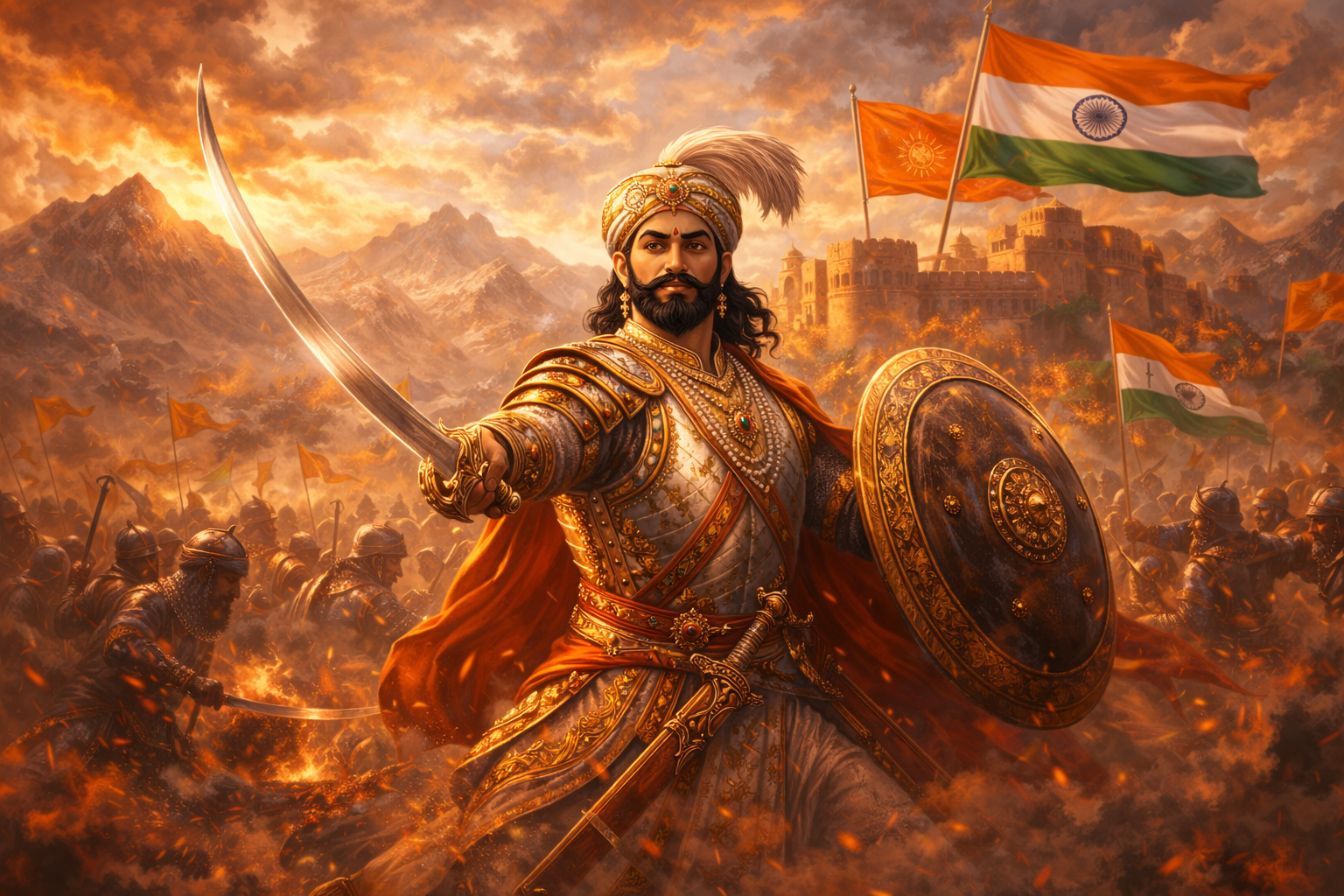
Shivaji Jayanti 2026: Inspiring History, Powerful Legacy & Grand Celebrations
Introduction to Shivaji Jayanti 2026
Shivaji Jayanti 2026 will be celebrated on February 19 across India to honor the birth anniversary of the legendary Maratha ruler Chhatrapati Shivaji Maharaj. This important historical day reminds people of the bravery, leadership, and vision of one of the greatest kings in Indian history.
Every year, millions of people celebrate Shivaji Jayanti with pride, particularly in the state of Maharashtra where Shivaji Maharaj is deeply respected as a symbol of courage and self-rule. The celebration includes cultural programs, processions, educational events, and tributes to his legacy.
Shivaji Maharaj was not only a fearless warrior but also a wise administrator who built a strong kingdom based on justice, discipline, and equality. His concept of Swarajya, which means self-rule, became a powerful inspiration for future generations.
Therefore, Shivaji Jayanti 2026 is not only a festival but also a reminder of leadership, courage, and patriotism that continues to inspire people even today.
Birth and Early Life of Shivaji Maharaj
Chhatrapati Shivaji Maharaj was born on February 19, 1630 at the historic Shivneri Fort This fort, located in the Pune district of Maharashtra, is considered a sacred place associated with his birth.
His father, Shahaji Bhonsle, served as a military commander under different kingdoms, while his mother Jijabai played a major role in shaping his character and values.
Jijabai taught young Shivaji stories from ancient Indian epics like the Ramayana and Mahabharata. Through these stories, she inspired him to fight against injustice and protect his people.
His mentor Dadoji Konddev trained him in horse riding, sword fighting, archery, and military strategies. Because of this strong upbringing, Shivaji developed remarkable leadership skills at a young age.
The Vision of Swarajya
One of the most important goals of Shivaji Maharaj was to establish Swarajya, meaning self-rule for the people.
During the 17th century, many parts of India were controlled by powerful empires such as the Mughals and regional sultanates. However, Shivaji believed that the people of the land should govern themselves with justice and dignity.
At the age of just sixteen, Shivaji began capturing small forts and expanding his influence. Gradually, he built a powerful kingdom that protected the culture, traditions, and rights of the people.
His dream of Swarajya eventually became a reality and laid the foundation for the Maratha Empire, which later became one of the most powerful forces in India.
Military Strategies of Shivaji Maharaj
Shivaji Maharaj is widely known for his innovative military strategies. He used guerrilla warfare tactics, which involved surprise attacks, quick movements, and strategic planning.
Instead of engaging in large open battles, he preferred attacking enemies in forests, hills, and difficult terrains where his soldiers had an advantage.
These strategies allowed smaller Maratha armies to defeat larger enemy forces.
Forts played a crucial role in his military system. Some of the most important forts associated with Shivaji Maharaj include:
- Raigad Fort
- Sinhagad Fort
- Pratapgad Fort
These forts served as strong defensive centers and helped protect the kingdom from enemy invasions.
Shivaji Maharaj also built a powerful naval force to protect India’s western coastline from foreign invaders such as the Portuguese and the British.
Administrative Excellence of Shivaji Maharaj
Apart from being a great warrior, Shivaji Maharaj was also an excellent administrator.
He established an organized system of governance known as the Ashta Pradhan Council, which consisted of eight ministers responsible for different administrative duties.
This system ensured efficient governance and helped maintain discipline within the kingdom.
Some of the key principles of his administration included:
- Fair tax policies for farmers
- Protection of women and civilians
- Strict punishment for corruption
- Religious tolerance and respect for all communities
Because of these policies, Shivaji Maharaj gained immense respect from his people.
Importance of Shivaji Jayanti in Modern India
Shivaji Jayanti holds great importance in modern India because it reminds people about the leadership qualities and vision of Shivaji Maharaj.
His life teaches valuable lessons such as:
- Courage in difficult situations
- Strategic thinking and leadership
- Respect for culture and traditions
- Commitment to justice and equality
These values remain relevant even today in politics, administration, and society.
Students and young leaders often study the life of Shivaji Maharaj to learn about effective leadership and nation-building.
Shivaji Jayanti 2026 Celebrations Across India
Shivaji Jayanti 2026 will be celebrated with great enthusiasm in many parts of India.
Grand Processions
Cities and villages organize large rallies where people carry statues and portraits of Shivaji Maharaj. Participants wear traditional attire and chant patriotic slogans such as “Jai Bhavani, Jai Shivaji.”
Cultural Programs
Schools and colleges conduct essay competitions, debates, and drama performances about the life of Shivaji Maharaj. These activities help students learn about Indian history.
Fort Visits
Thousands of people visit historical forts connected with Shivaji Maharaj to pay tribute and learn about his achievements.
Social Service Activities
Many organizations arrange blood donation camps, charity programs, and community service initiatives on this day.
Shivaji Jayanti in the Digital Era
In recent years, Shivaji Jayanti celebrations have expanded to digital platforms as well.
People share inspirational quotes, historical information, and tribute videos on social media.
Educational institutions conduct webinars and online lectures about Shivaji Maharaj’s leadership and contributions.
These digital initiatives help spread awareness about Shivaji Maharaj to a global audience.
Leadership Lessons from Shivaji Maharaj
The life of Chhatrapati Shivaji Maharaj offers many leadership lessons.
First, he demonstrated the importance of having a clear vision. His dream of Swarajya guided all his actions and decisions.
Second, he showed the value of strategic thinking. His innovative military tactics allowed him to defeat powerful enemies.
Third, he believed in fairness and justice. His administration ensured that all communities were treated with respect.
Finally, he emphasized discipline and responsibility, which helped build a strong and stable kingdom.
Cultural Impact of Shivaji Maharaj
Shivaji Maharaj played a crucial role in protecting Indian culture and traditions during a time of political instability.
He encouraged the use of regional languages and promoted local traditions.
His leadership strengthened the identity and pride of the people of Maharashtra and India.
Even today, statues, monuments, and historical sites dedicated to Shivaji Maharaj attract millions of visitors every year.
Conclusion
Shivaji Jayanti 2026 is a meaningful celebration that honors the birth anniversary of one of India’s greatest rulers, Chhatrapati Shivaji Maharaj.
His bravery, intelligence, and commitment to justice transformed the history of India and laid the foundation for a powerful empire.
Even centuries later, his ideals continue to inspire leaders, students, and citizens across the country.
Therefore, Shivaji Jayanti is not only a historical celebration but also a reminder of the values of courage, leadership, and patriotism.
Jai Bhavani! Jai Shivaji!